
A while back, I used a special computer program called “SOF Sof Torah 2000,” given to me by Professor Eliyahu Rips from Jerusalem, to look for hidden messages in the Torah. This method, called Torah Codes, searches for words by picking letters at regular intervals in the Hebrew text of the Torah. I was curious about the timing of lighting Chanukah candles, a topic where two great rabbis, the Rambam and the Shulchan Aruch, have different opinions. The Rambam says we should light the candles at sunset, while the Shulchan Aruch says to wait until after sunset, when the stars come out. I wanted to see if the Torah might hint at which timing is preferred, even though we can’t use these codes to decide Jewish law (halacha). What I found was so surprising that I shared it with Professor Rips, a world expert in Torah Codes, and he confirmed it was a meaningful discovery. Here’s what I learned, explained in simple terms.
What I Searched For
I looked for two Hebrew words in the Torah: “חנוכה” (Chanukah) and “שקיעה” (sunset, or shekiah), because the Rambam says to light Chanukah candles at sunset. I also searched for “חנוכה” and “צאת הכוכבים” (the time when the stars come out, tzeit ha-kochavim), which is the timing the Shulchan Aruch prefers. The program searches by starting at one letter in the Torah, skipping a certain number of letters, and seeing if the word appears. For example, it might start at a letter, skip 100 letters to the next one, and keep going until it finds the whole word.
What I Found
The program showed that the words “חנוכה” and “שקיעה” appeared very close to each other in the Torah, specifically in the book of Shemot (Exodus), chapter 25, verses 29 to 40. This part of the Torah talks about the Menorah, the special lampstand used in the Mishkan (Tabernacle), which is very fitting because Chanukah is all about lighting the Menorah! Even more amazing, the word “מנורה” (Menorah) appears naturally in this same section, even though I didn’t search for it. When I looked for “חנוכה” and “צאת הכוכבים,” I didn’t find anything significant, which made me think the Torah might be hinting that the Rambam’s timing (sunset) is special.
Professor Rips’ Confirmation
I sent my discovery to Professor Rips, who is an expert in finding these hidden messages and has studied them for many years. He looked at my results and said they were very interesting. He explained that the word “שקיעה” (sunset) appears in a way that’s very rare—it’s one of the closest patterns of this word in the entire Torah. He also said that when you arrange the Torah’s letters in a grid with 34 letters in each row, “חנוכה” and “שקיעה” show up very close to each other, almost like they’re meant to be together. This closeness, in a part of the Torah that talks about the Menorah, makes the finding stand out.
What Does This Mean?
Professor Rips’ analysis suggests that it’s very unlikely for “חנוכה” and “שקיעה” to appear so close together in this meaningful part of the Torah just by chance. It’s like finding a hidden message that connects Chanukah, the Menorah, and the timing of sunset in a special way. Since I didn’t find anything when I looked for “צאת הכוכבים” (the star time), it feels like the Torah might be giving a little nod to the Rambam’s idea of lighting at sunset. Of course, we can’t use this to decide Jewish law—halacha is based on the Shulchan Aruch, which says to light after the stars come out—but it’s still an amazing discovery that makes you think about the deeper layers in the Torah.

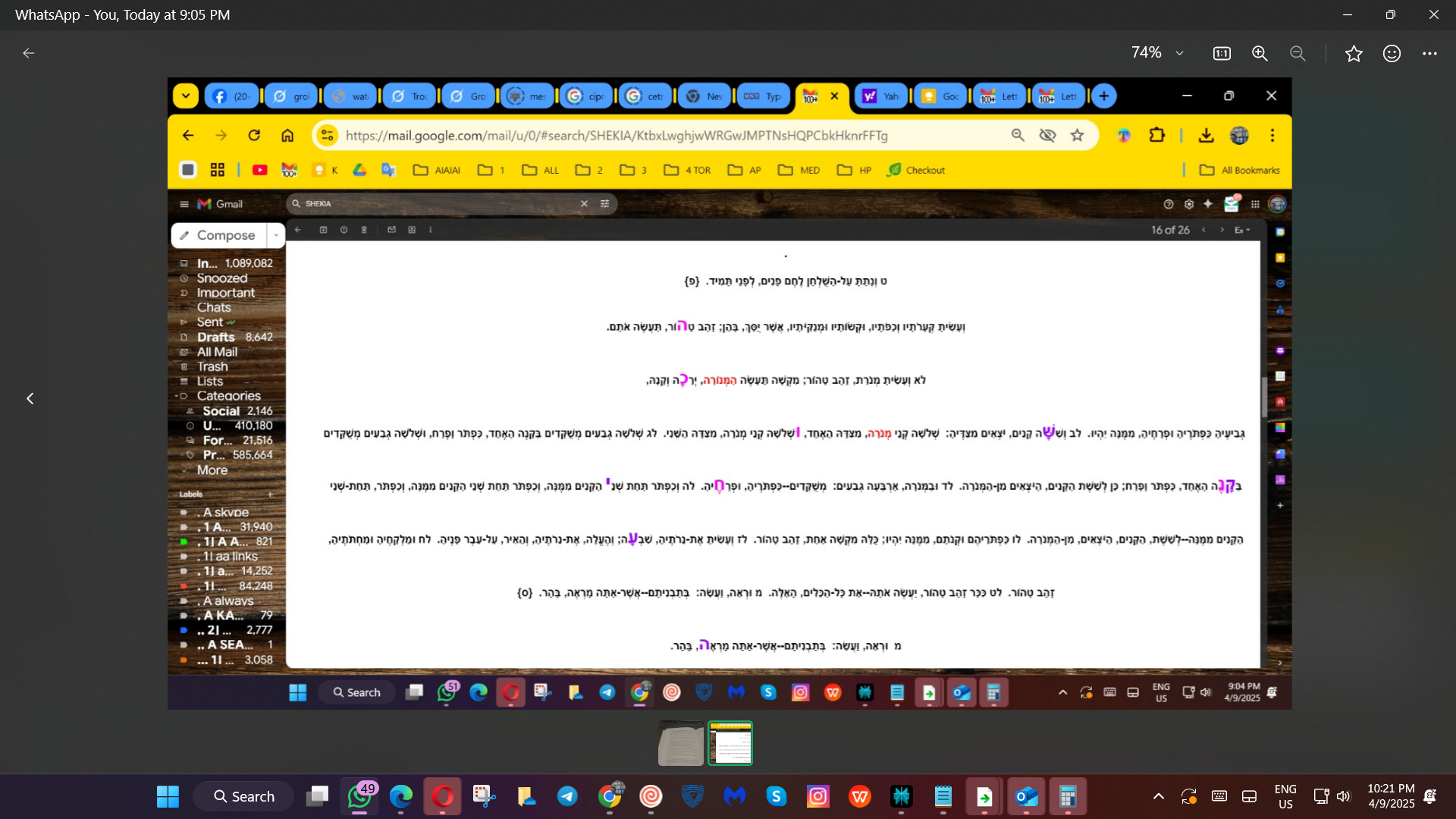
Letter from Prof Rips מכתב מפרופסור ריפס
Dear Dr. Harold Jitschak Bueno de Mesquita,
Thank you for your kind letter. I checked your finding and it is indeed interesting. Actually, there appears the word השקיעה with the skip 103 which is the third minimum in the whole Torah. If you arrange the table with 34 letters in each line, then the word חנוכה with the skip -69 appears very close to השקיעה. (You can change the number of letters in the line pressing the key F3; it will open a dialog window, write in the line “cut” the number 34 and then press “Enter”)I do not know about online search programs for Torah Codes, maybe there some I am not aware of.This program does work with Windows 8, and if you wish, I will be glad to do it for you (it does not cost).With my best regards,Eliyahu Rips
 medicine from harold jitschak bueno de mesquita
